In a world generating more genomic data than ever before, one Rotorua-based startup is tackling a problem few have been able to solve.
Helical, a self-funded tech company headquartered in Rotorua, is building the infrastructure to store, connect and unlock DNA data at scale with major implications for agriculture, sustainability and the global food system.
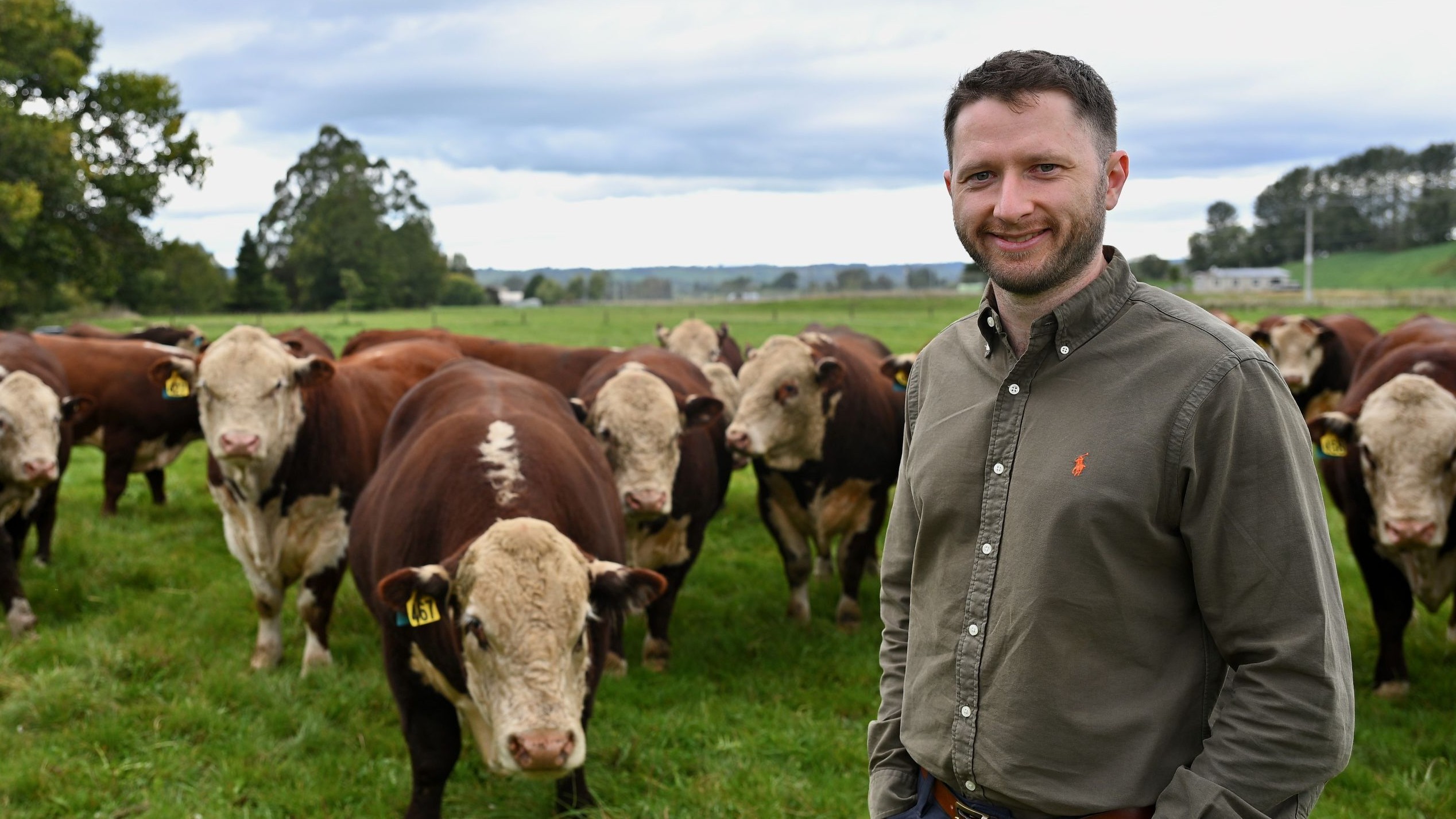
Founded by Manawatū-born Dan Garrick, Helical sits at the intersection of science, data and real-world impact, turning complex genetic information into something farmers, producers and supply chains can use to make decisions to improve profitability, efficiency, and sustainability.
Helical’s origins trace back to a unique combination of academic influence and global experience. Garrick spent part of his upbringing and education in the United States, where his father, an academic, was based. While completing a PhD in aerospace engineering modelling fuel sprays in rocket engines, he was drawn into genetics through conversations with his father and a colleague developing software to predict livestock performance from DNA. Scaling that work exposed a deeper problem: the data infrastructure underneath couldn’t keep up. Solving it became Helical.
Globally, the volume of DNA data has grown exponentially, but the ability to store, connect and use that data has lagged behind. Helical is addressing that fundamental gap: while vast amounts of genetic information exists, it has historically been difficult to link it to real-world outcomes and decisions that matter to farmers, producers and consumers.
At its core, Helical is a database designed to store DNA and other genetic data and feed it into analytical tools enabling insights that were previously out of reach.
What sets Helical apart is its ability to handle the sheer scale and complexity of genomic data. It is currently the only off-the-shelf pedigree and performance data system capable of both managing and analysing in real-time the data volumes generated by modern DNA testing. That means the people making breeding and selection decisions from individual farmers to commercial companies, are always working from the most current information available.
“To put that in perspective, a large beef cattle breed association might have DNA data on 100,000 animals,” Garrick says. “Each animal may have around 95,000 DNA data points - that’s 9.5 billion pieces of information. The challenge isn’t just storing that data, it’s being able to analyse it efficiently and routinely, and to deliver those insights in an intuitive manner to non-technical users.”
In practical terms, this capability is already changing how decisions are made on the ground.
“A Simmental breeder in Rotorua selecting a bull can now compare that animal’s genetics not just to local stock, but to hundreds of thousands of animals globally,” Garrick says. “That gives far better information for breeding decisions that will affect their herd for generations.”
Helical’s platform also operates in real time rather than in periodic batches, allows data to move between laboratories without being lost and works across multiple species from beef cattle, sport horses, merino sheep, and working dogs to radiata pine, while remaining accessible as an off-the-shelf solution.
Unlocking genetic data has far-reaching implications, particularly for agriculture. Helical’s platform enables better genetic selection, which is increasingly recognised as a key driver of sustainability, traceability and productivity. By linking genetic data to performance outcomes, farmers and producers can make more informed decisions that improve efficiency and long-term impact.
“In real terms, when you select animals with naturally lower emissions or better feed efficiency, those traits pass to their offspring and their offspring’s offspring, indefinitely,” Garrick says. “It’s like compound interest for sustainability.”
In New Zealand alone, genetic improvement delivers significant, multi-billion-dollar benefits over time. That impact is already being realised in practice.
“DairyNZ uses Helical’s platform to store genotypes on the national dairy herd and to help deliver the national dairy evaluation,” Garrick says. “That evaluation underpins breeding decisions across New Zealand’s entire dairy sector.”
Helical's platform has also been used in methane research that combined datasets from LIC and CRV (New Zealand’s two primary dairy genetics providers), work aimed at identifying animals that are naturally lower-emitting without compromising productivity.
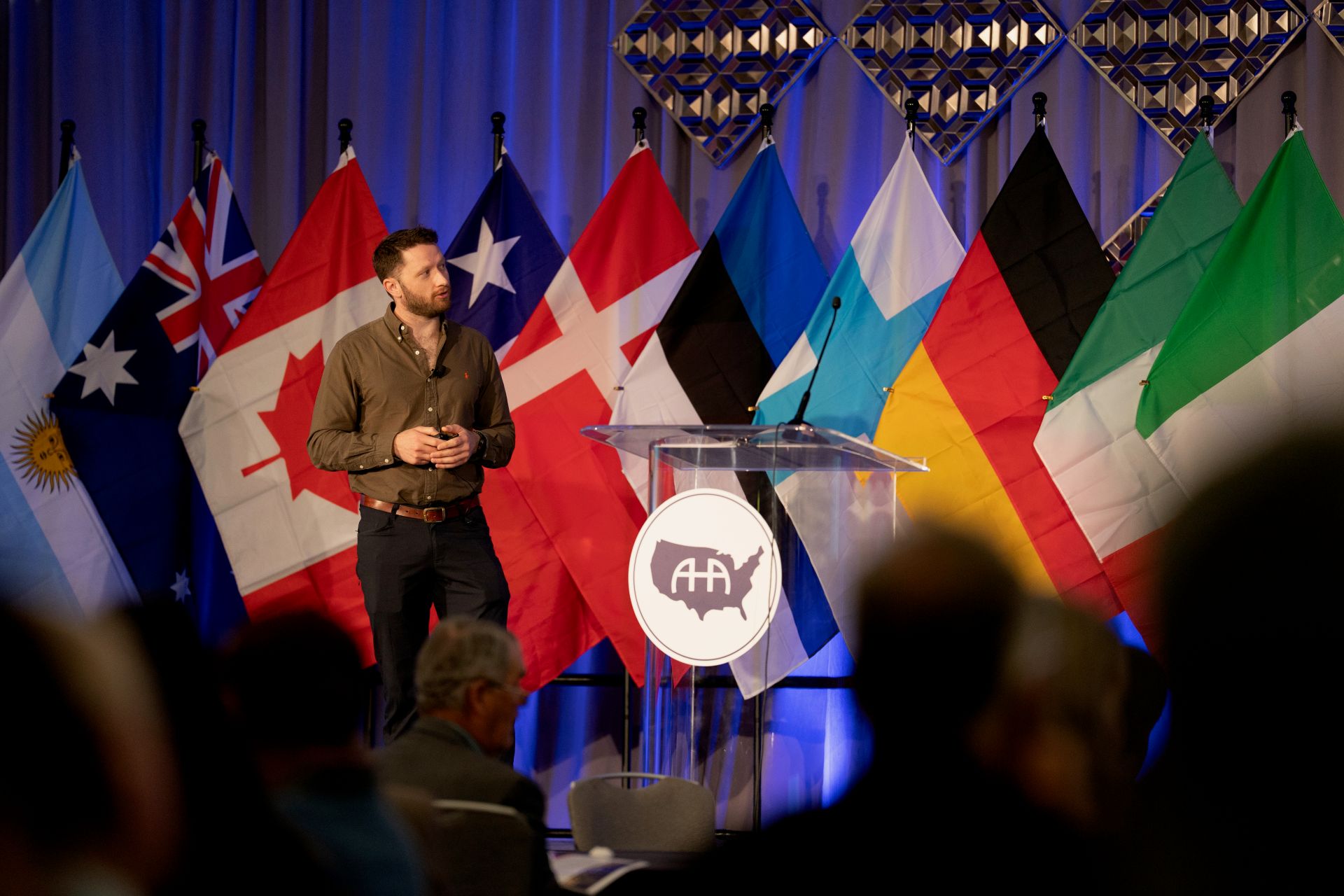
Helical works with national breeding organisations, research institutions and commercial farming operations, and is now operating across New Zealand, Australia, the United States, Canada, the United Kingdom, Ireland, South Africa, Argentina and Uruguay, with breeders in many more countries accessing tools and information available on the platform.
“Many organisations are coming to us because their legacy systems were built for a different era of data and analytics, and that’s now holding them back,” Garrick says.
As Dr Jackie Atkins from International Genetic Solutions notes, “Helical’s tools are pivotal to IGS’s ability to serve the beef industry and improve beef cattle genetics internationally.”
While Helical’s impact is global, its home base is firmly in Rotorua - a decision that reflects both strategy and lifestyle.
Justin Kimberley, RotoruaNZ Head of Strategy & Investment, says: “We’re proud to have Helical headquartered in Rotorua. It’s another example of the tech and innovation breeding ground we can offer, with our central North Island location and easy lifestyle supporting great people to compete globally from Rotorua.”
As industries worldwide look to improve productivity, sustainability and traceability, the ability to better use genetic data is becoming increasingly important and Helical is positioned at the forefront of that shift.
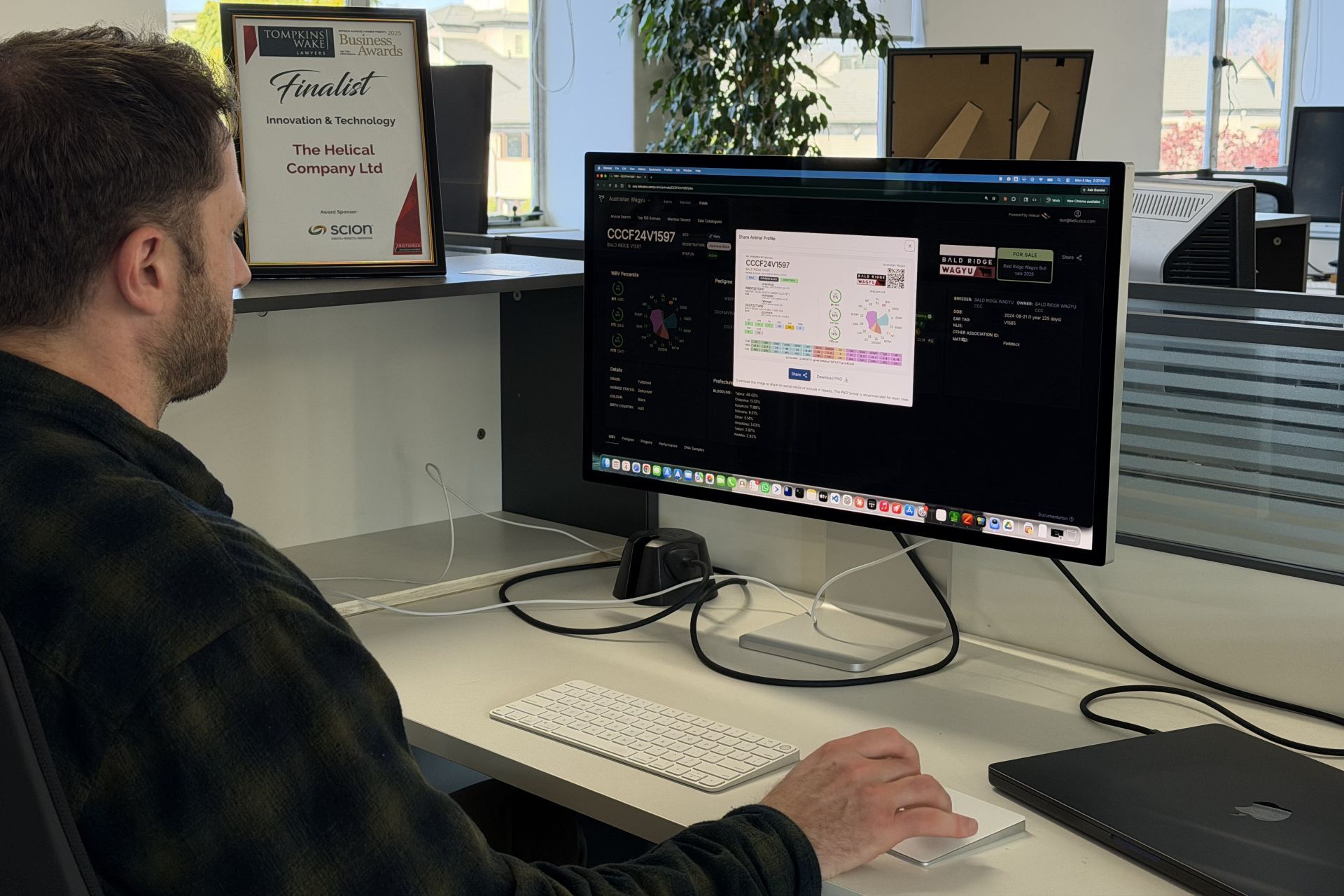
Launched commercially in 2021, Helical is both profitable and entirely self-funded through customer revenue - a rare position in the tech sector that signals strong product-market fit. The company has also been recognised as a finalist in the Tompkins Wake Rotorua Business Awards 2025 Innovation & Technology category, the 2026 Beef + Lamb New Zealand Awards in the Technology Category, the 2026 New Zealand Hi-Tech Awards in the category and has been selected for the Growth & Scale category in the 2026 Fieldays Innovation Awards.
Looking ahead, the company’s ambition is to continue unlocking the value of genetic data both in Aotearoa and globally, as pressure grows on food systems to be more efficient, transparent and sustainable.
“What excites us is that this technology is permanent and cumulative,” Garrick says. “Every percentage point of improvement we make today delivers benefits forever.”
As the demand for more sustainable and traceable food production increases, the countries and companies that control the infrastructure behind genetic data will help shape the future of agriculture. New Zealand has the research capability, the agricultural base and increasingly, the technology platforms to be one of those leaders.
From its base in Rotorua, Helical is tackling a challenge with global implications, helping unlock the full value of genetic data for industries that feed the world and reinforcing the region’s reputation as a place where innovation thrives.